Can you replace a staircase without taking the ceiling down?
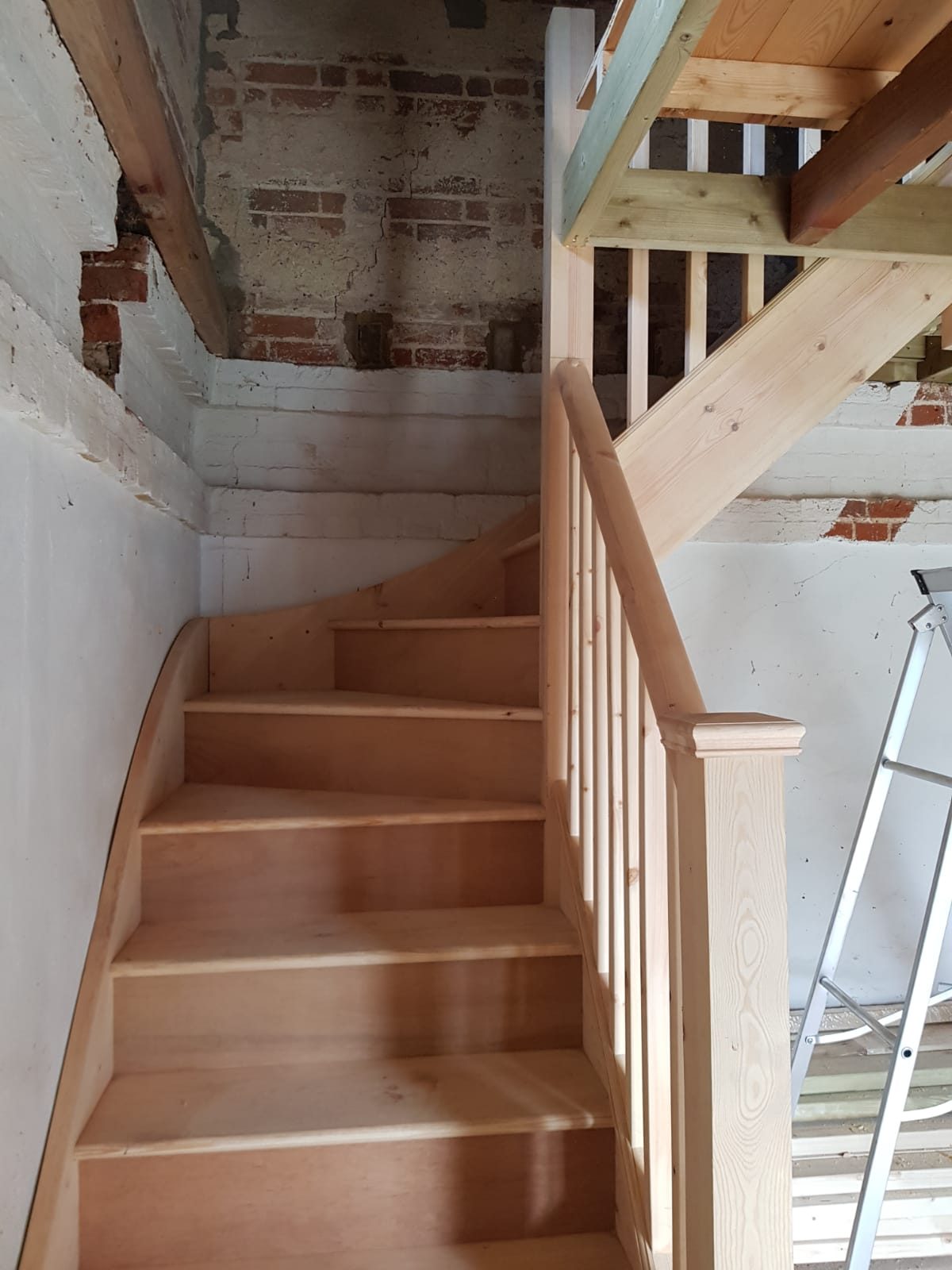
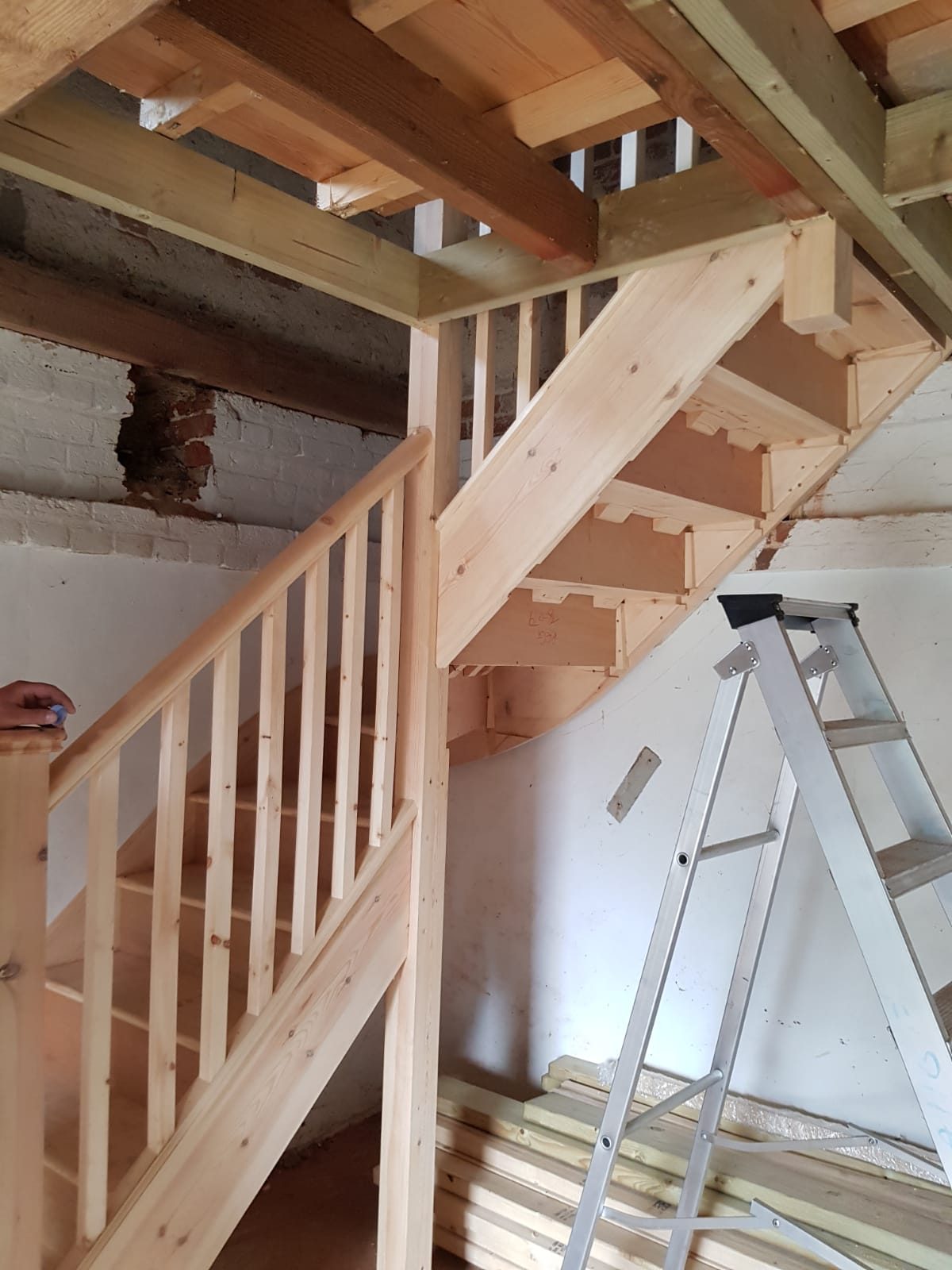
In most houses, yes. A like for like replacement in the same opening is usually done from inside the hallway and the landing, with the old flight cut out in sections and the new one brought in and set. Where it gets more involved is when the opening is changing size or the flight is moving, because then the trimmer, the floor structure and often the ceiling below are all in play, and that becomes a building job with building regulations attached.
Do stairs need building regulations approval?
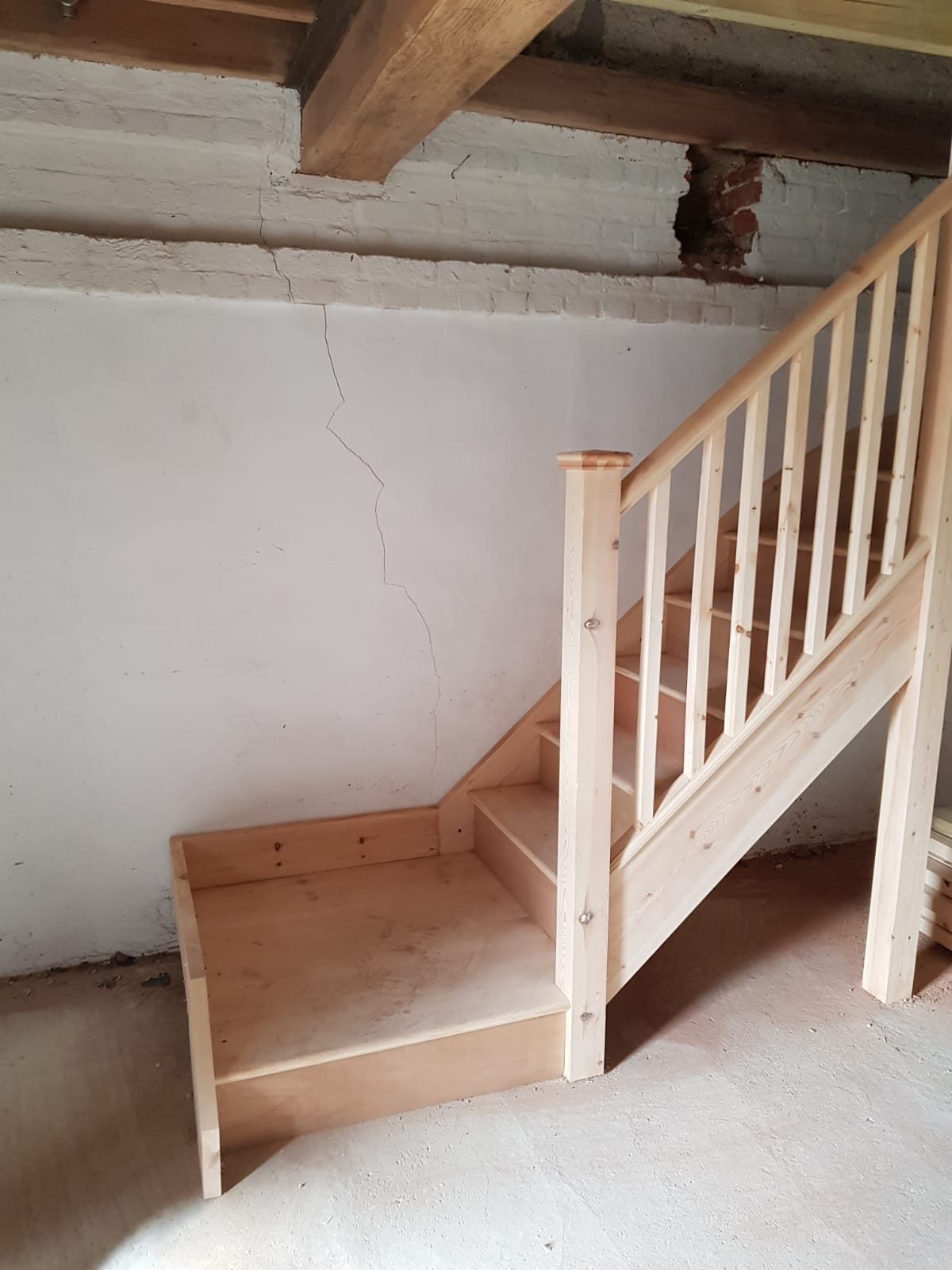
A new staircase, a change to the opening, or a change to the rise, the going or the guarding does. A like for like replacement in the same position and the same geometry generally does not, and neither does swapping spindles and a handrail. The regulations set the pitch, the headroom, the tread and riser sizes and the gaps in the guarding, and we build to them regardless, because they are the difference between a staircase that is safe and one that just about works.
What is the gap rule on spindles?
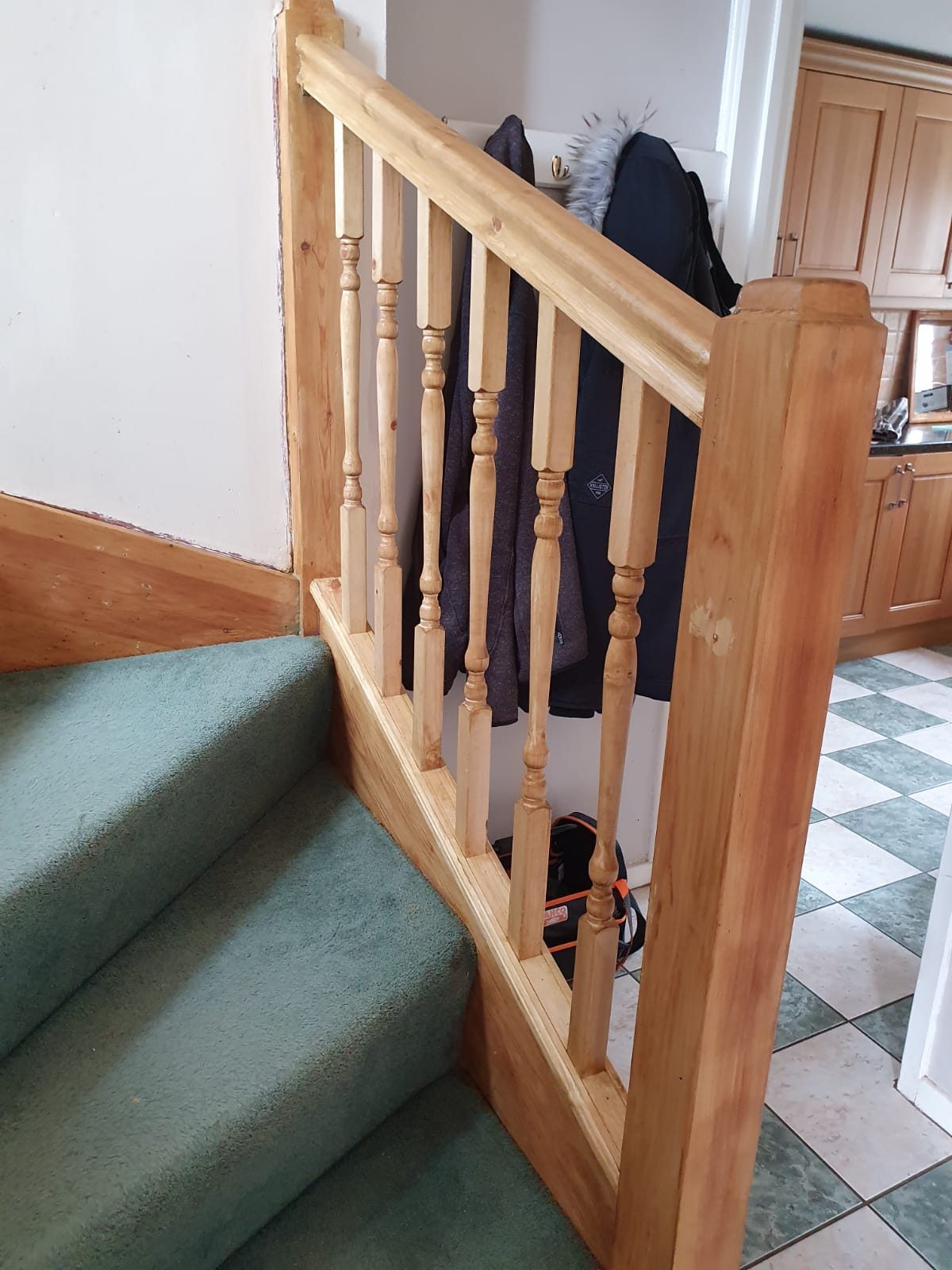
A 100mm sphere must not be able to pass through the guarding, so the spindles go in at centres that keep every gap under that, including at the newel and at the top of the flight where people often leave a wider gap by accident. It is the single most common thing we find wrong on existing balustrades, and it is exactly the sort of detail an inspector will check.
Can you just replace the spindles and handrail?
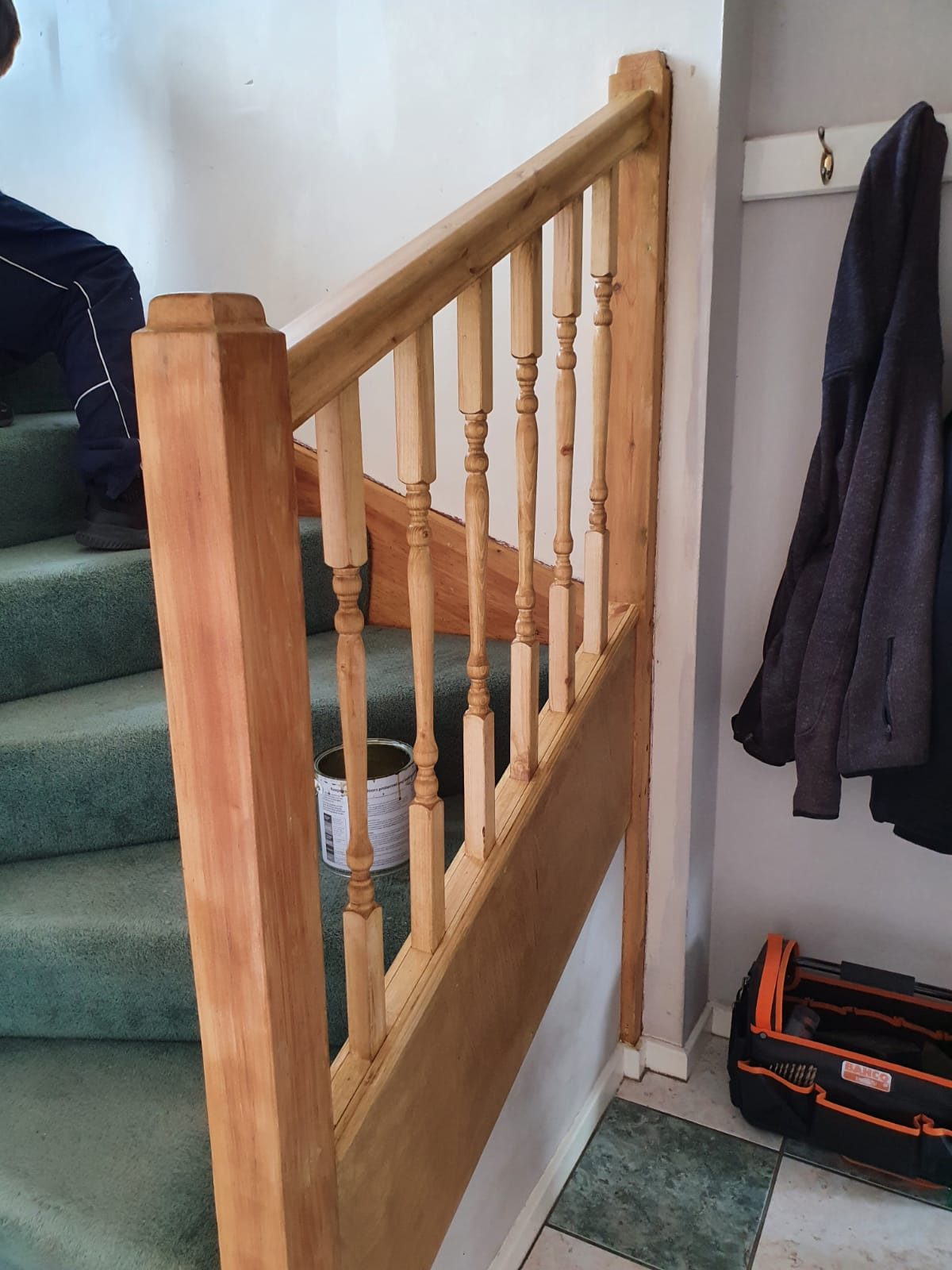
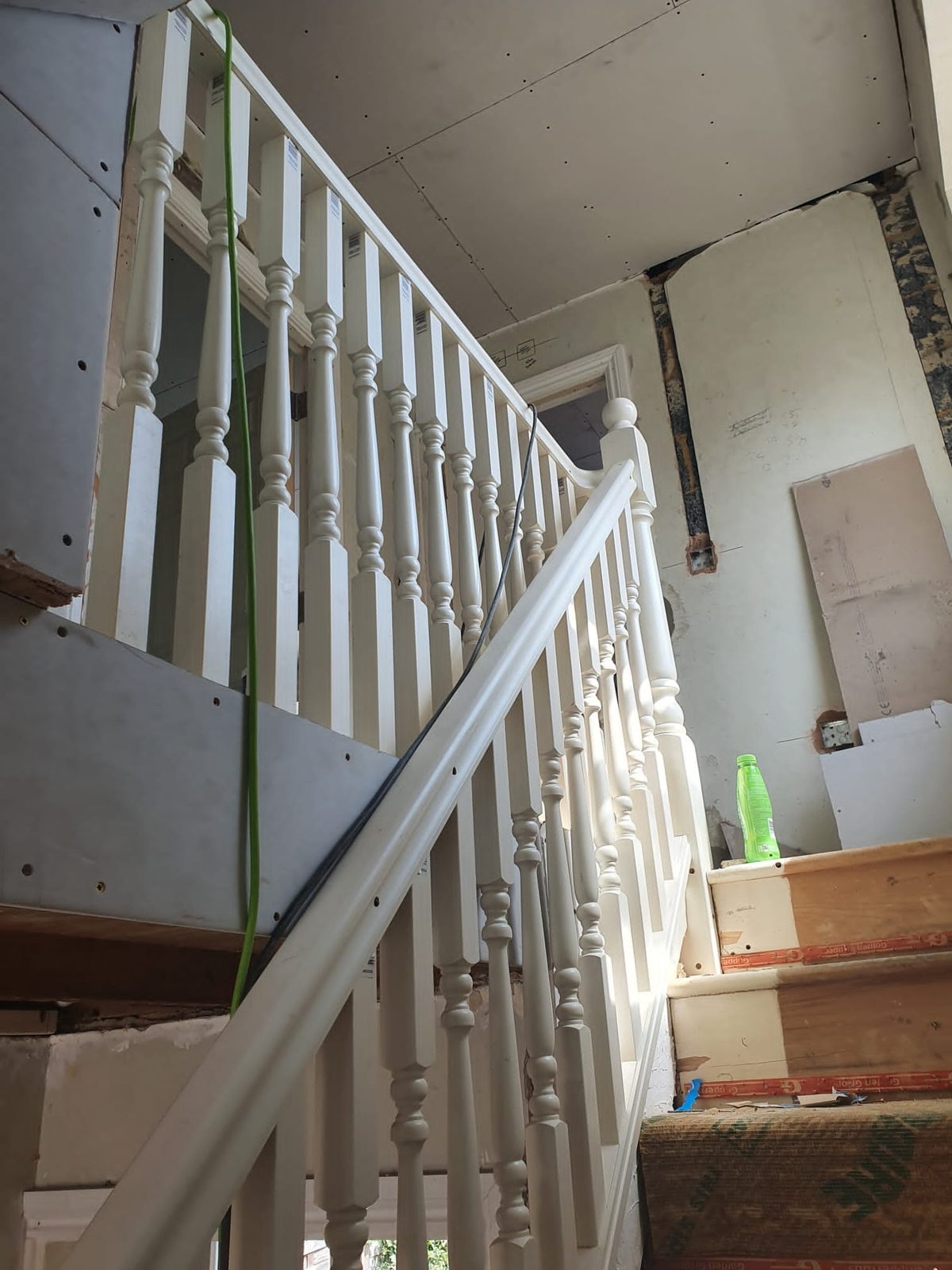
Yes, and it is one of the best value jobs in the house. If the strings, treads and newels are sound, swapping dated spindles and a chunky old handrail for something cleaner transforms a hallway for a fraction of the cost of a new staircase. We take the old rail off, cut new base and handrails to the pitch, fit the spindles at the right centres and make good around the newels.
How long does a staircase take?
A spindle and handrail refurbishment is usually a day or two. A like for like new flight is generally two to three days including making good. Anything where the opening is changing, the flight is moving or a winder is being introduced runs longer and needs the structural side sorting first. You get a realistic sequence at quote stage, including how long the stairs will be out of use.
Can you match a staircase in an older house?
Usually. Older properties tend to have turned newels, particular spindle profiles and handrail sections that are no longer standard, and quite a lot of it can be matched from stock profiles or turned to suit. Where an exact match is not available we will show you the nearest options rather than fitting something that is close but obviously different, and in a period hallway that judgement matters.